Showing posts with label horses. Show all posts

Monday, January 23, 2012

Cave of Forgotten Dreams

You know how there's that dinner list thing, where people talk about who they'd invite for dinner, anyone from any time? Werner Herzog, the director of Cave of Forgotten Dreams, has been on that list of mine for a long, long time. I see every film he makes, documentary or fiction. I believe he's an archivist by nature, profoundly interested in excavating human truths and preserving them for the future. Perhaps that's why he felt such a deep urge - and sense of urgency - to film the paintings discovered in the Chauvet Cave in southern France.

In a way, the modern mind can't quite relate to the drawings in the cave. Grasping that you are looking at images created some 32,000 years ago is akin to knowing in real senses what one billion dollars is. In the end, it's theoretical.


Except for these horses...


We can look at all of the images (but for those that are concealed behind stalactite and stalagmite formations) from Chauvet Cave because they are widely available on the Internet. We can see drawings of human figures, bears, big cats, water buffalo, bison, and some animal species that vanished thousands of years ago. They are all interesting to look at, even as the mind searches for any kind of foothold to know what kind of people created them. Because to know they weren't people like us tells us nothing, really.

But in his film, Werner Herzog returns again and again to these horses. (I wish I knew how to make and link in a sound file of his voice as he says "the horses" in that wonderful round, slightly thick German tone of his.) I don't know what pulled him back to the horses, but I know I couldn't wait for the camera to return to them. Because these horses stand apart from the rest of the drawings. Maybe it's how they were drawn, the complexity of the group of them, the four different colors and sizes of them, the clarity with which they were depicted. It's as if the artist meant to paint them in exacting, painstaking detail, meant exactly to capture the what-they-are-ness of them. I think that intention is there. But what does that mean, what does that say about horses, I wondered to myself, watching the film. Herzog mentions in his running commentary that horses were hunted as food, among other things. Yes, but still, I can't help but feel that the human being who painted these four horses saw something more in them, understood something more. And oh, to know what that might have been.

Tuesday, June 7, 2011

The Horse as Equal

I never feel equal with people, really never. Less than, more than, better than, worse than - all of that is around people. We hardly recognize that we start from the same place. That recognition has long since been displaced by countless things in life that distance us from ourselves.

It's not like that around horses, though. I feel my horse and I are equal in the moment, whatever that moment may be, whichever horse it may be. I think the species difference is what creates that sense for me. For their powers, the mares are advantaged over me; for mine, I am advantaged over them. Face to face, it all levels out on a being-to-being plane. We are present, and, because we cannot communicate in the same language, we are equalized by our limitations and left able to be only what we are. It's like we're in the same boat for our differences. From there, we interact. I like the bluntness of it, the inescapable immediacy of it. I just don't think you can lie to a horse without lying to yourself. Sometimes it seems I get a better measure of myself from horses than I ever do from humans, even those I love most in the world.

Friday, December 3, 2010

Books I Love - No. 1, The Camerons

On my way to work the other day, I stole a few minutes and detoured to Saxony's barn to be introduced to a new farrier. The cold was raw, sweeping in on an assaulting wind. After talking to the farrier, I went looking for Saxony. She was standing in the turnout shed, shifting her weight on the semi-frozen ground. From behind her I heard the sounds of another horse moving nearby. It reminded me of something:

Then she heard the tump, tump of pit ponies nudging about in the garden to get out of the wind. The hollow sounds of the hoofs meant the ground was frozen.


Those sentences are from The Camerons, by Robert Crichton (cousin of the more famous Michael.) I've read the book dozens of times, pretty much every year since it was published. This is one of two books I would cut off my arm or leg to have written.

Books are so important to me. During my childhood, they offered escape, adventure and hope. Later, as I grew into life, certain books resonated profoundly in me. They were the ones which made me learn something about myself or compelled me to ask a question about life I'd never thought of. Eventually, I assembled what I came to call my "Death Row" library, the few books I would keep with me if I ever ended up -- well, you never know.

It turns out that horses appear in each of these books. None of them are about horses, but they all feature horses at pivotal moments in the story. In every instance, the authors had to have known horses; there isn't a false note in any of their stories.

The Camerons is just a story about a Scottish mining family struggling for a better life a century and a half ago. It contains all the ingredients of a great mini-series: love and hate, tribulation and triumph, sorrow and joy. The writing is straightforward, the characters drawn so clearly I'd know them all if I passed them on the street. I was 14 when I first read The Camerons, and then I read it over and over again because theirs was the family I wanted to belong to.

"Someone left the horse out after the long walk."
"I didn't know."
"No, of course not. It was exhausted, you know. You broke it with your barrels of snails."
He felt a surge of sorrow for the pony.
"Standing all night in the rain."
"Och, I'm sorry. That was bad."
"Very bad," she said. "He died."

That blunt exchange occurs at a moment of crisis in the book. The first time I read it, I was shocked into tears. All these years later, I still read toward this moment with dread, because the death of this horse, a "garron," they called it, also represented the death of another thing. Both were heartbreaking and both were things I could understand, even at 14.

Sunday, November 28, 2010

What a Difference a Day Makes

Round about Thanksgiving night, lots of people were thinking about Denali and her people, dreading the day to come. But, horses. Who ever knows? Denali threw a curve ball and got a bit  better, putting a heartbreaking moment on hold. Now we wait with our fingers crossed, hoping that her owners can keep their sea legs long enough to learn to live on ever-shifting terrain. In one day, so much changed. At least for that day, today, and maybe even tomorrow, Denali seems to have made other plans. In the vast disembodied ether that is the internet, a hundred and a half voices let out a collective sigh of relief. 

Tuesday, October 12, 2010

White Horse on the Hill

Watching the UK Telegraph's live video of the preparations to rescue the 33 Chilean miners trapped deep in the earth for 69 days , I saw the camera pan across the scene, over the family camp, past heavy cranes and sea containers, slowly pulling focus to the immense structure erected over the half-mile-deep rescue shaft.

Families and press alike watch the TV monitors. Helicopters circle low in the approaching dusk; dignitaries disembark. In that arid, desert mountain place, the soil looks dull brown, relieved only by rough bits of scrub.

But there, high on a slope, beneath a Chilean flag, sat an officer astride a white horse. The Telegraph's camera rested on that image for a long moment. I'm glad it did.

Sunday, October 10, 2010

Why Do I Ride?

That question, in general, was raised in an excellent piece, found here, Grey Horse Matters: The Horse Gene, the other day. It's a good question, but for me it follows secondary to what I see as the first question: Why Do I Horse?

Because the simple, tangible reality of time spent with horses feels like precisely that to me: Real. Depending on your circumstances, perceptions of the actual, the present, the "real" can be elusive. "It's relative," people used to say, where today they might say, "Whatever."

But that reality is hard won; it was for me. I was born overseas to parents lashed tight together with cords spun from bitterness, deception and fear. It was a strangling life for them, let alone their accidental children. Trapped in just what "is" as a child, reality isn't even a concept until the first major thing happens, good or bad, that throws you out of yourself and then back in in a single involuntary instant. In my case, I would have been better off staying in "is." Reality, when I recognized it, trapped me between myself and my parents in the inexhaustible chokehold that exists between predator and prey. I became responsible for managing my own safety, or knowing that, anyway, but never understanding it. It was an oppressive climate of uncertainty and vigilant self-consciousness, one in which I was always struggling to stay invisible, desperate not be caught out by the din of terror clamoring in my head. There, I learned myself as a reactive creature, not a person, not an identity, not a being separate and apart from the forces threatening it. Trapped between the assaults wrought by one parent and the cool, unseeing facade erected by the other, I was never free.

Until the first time I stood near a horse. I don't even remember her name. She was a crazy pinto mare, a filly, really, who'd been ridden too young by the six-foot-tall farm boy who owned her. His farm was one of three on the long blacktop road where our little bi-level ranch house had been built, oddly out of place, and quickly sold to my parents. I don't know why my parents moved to the country. For me, it just meant there would be no place to run, no one to turn to. But I could get away with walks in "nature." My father approved of what he called the "American pastoral setting," so unlike what he had experienced in wartime Poland, while my mother preferred her dogs above all else and gave little care to absent children.

My walks took me again and again to that pinto filly. I would stretch my hands through the paddock fence, feeding her long grass from the roadside. There never seemed to be any people around, and she was alone. One day I climbed the fence and slipped onto her back. I can still remember the warmth of the sun on her sides. She trotted easily under a low-hanging branch and scraped me off, then went back to snuffling among the weeds.

There had been animals before, for me. My mother was a dog breeder, and we'd once had a cat. When whelping boxes had to be cleaned, the litters of puppies were brought to me for safekeeping. I loved those times, loved how it was to be with creatures just as vulnerable as me, but it was different with the filly. She was bigger than me, stronger than me, taller than me. She was a whole separate being who could react to me as she pleased. For the first time in my life, I wanted someone to like me. That someone just happened to be a horse. I wanted her approval, and I worked really hard to get it.

I think that is it with me and horses. Somehow, their self-awareness drew me in when I was a child, and it keeps me with them today. It's not a consciousness that we can know, I don't think, but we can sense it, just as they can sense ours. A dog will see you, a cat will regard you, but a horse will look at you. That pinto filly looked at me when I couldn't even see myself, and then I did.

Sunday, September 12, 2010

Things That Fall Out of the Sky

I put Dar into a place I could finally carry and keep him when I wrote about him on August 31st. That's also when I understood that I was ready to move on, eager to move on. The next day, this notice showed up in an email:

Lovely black Appendix Mare: 9 years old, 15.3hh, loads, clips, bathes, great on trails alone or with others, good on roadside riding, rides English or Western, loves to jump, dressage prospect but would need fine tuning in the ring, sound, sane, no vices, pet personality, up-to-date on shots, worming, farrier, negative Coggins 2010. Moving, must sell. Good home only.


I wasn't looking, not to say as much, anyway, but something in the advertisement moved me to call. Here she is going through a pre-purchase exam during yesterday's rainy morning.


Friday, July 9, 2010

They Linger

The festival I work for opens tomorrow. We call the seven days before opening day Hell Week. The population in the park swells from an off-season high of 10 or 15 staff to 1,500 contracted participants during a relentless, breathless ingress of RVs, tents, animals and people, hundreds of people. We hook our radios on our hips to manage the torrent, working until we can't work anymore. After this frenzy, opening day unfolds.


Thousands of guests pour through the gates. Images long familiar to me captivate them.


For me, it is the echo of horses everywhere and how much I miss my own.

I glimpse horses here and there every day during Hell Week -- pass by rehearsals, see the huge trailers moving slowly down our winding back roads, hear the neighing of circuit horses anxious to settle in. I have horses too, I think to myself, fussing at that silly, irritating feeling of being left out, of wanting to be part of what I'm missing. This is where my horses came from, this temporary world of other times, other places where people pay to escape, but which reminds me today of the world I'm longing to get back to, the one where my horses linger.

Monday, June 14, 2010

Engines/Environment

I took this picture in Seoul, South Korea a few years ago. It's a roof hanging over the courtyard of a shopping mall. Tonight, it captures the pervasive, seemingly inescapable presence of rain that is wearying me. Moisture hangs in the air, thick like a veil I can't ever completely brush aside.

Entropy came to visit us this weekend, moving toward us through the rain. I didn't see the horses for managing wreckage.

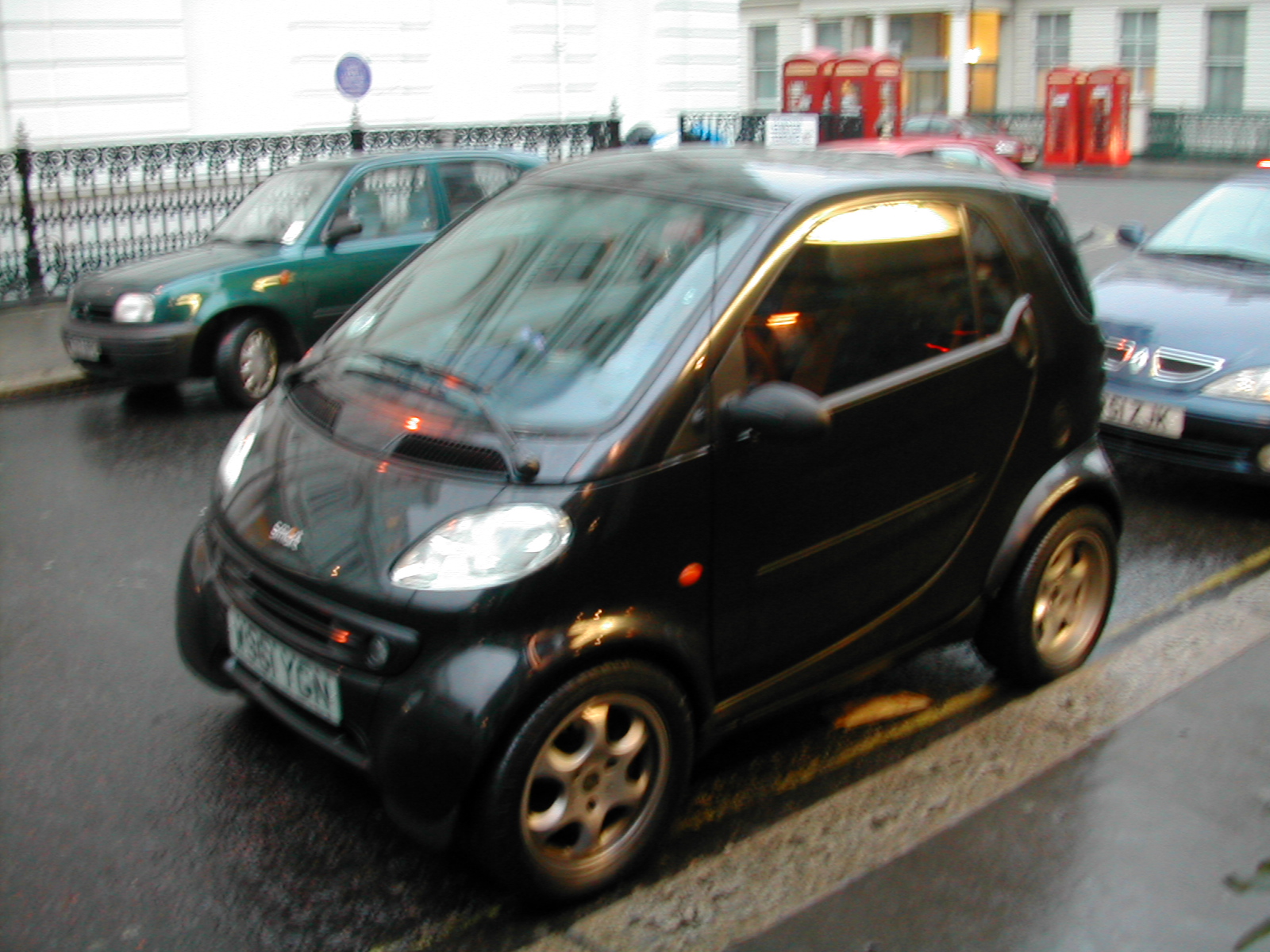
One of our cars died. The '91 Pathfinder so beloved to H.G. died on the eve of his 60th birthday. He's 60. How? We've been together 20 years, but I never dreamed one day he'd be 60. "Gold bullet, silver bullet," our mechanic said. "Which do you want?" I thought of a car I'd seen in London long years ago, way before it showed up in the States. Ah, well... After taking a few hours for the shock to settle, I found something to borrow so H.G. could use my decaying Pathfinder.

In other words.

A trend soon emerged. Our newish coffee maker went, followed moments later by my hated (despised, really) cell phone. We can always live without the cell phone -- oh, I prefer to, but coffee supplies core nutrients to our armature. Like junkies, we drove in a jittery panic to replace the coffee maker. Resentfully, I bought the cheapest cell phone I could find, reminding myself that really, the only reason I have it is so H.G. and I can talk to each other when he steps out of his office to take the requisite lunch break. Or when I call him to tell him I'll be home from the barn by, oh, 7:30. I'm always wrong. I always take longer with the horses than I mean to. I guess I take as long with them as I need to. They supply core nutrients to me.

I saw this picture in the New York Times a couple of weeks ago, maybe in an archived review of Warhorse, a play that premiered in London a while ago to great critical acclaim. I think I see it inside out. It reminds me of how I puzzle over horses, try to figure them out, try to imagine what it must be to be one of them. But in the end, they are a thing that drives me, claims me. Their engineering keeps me going when things are breaking.

Tuesday, May 11, 2010

The Manager in the Mist

Today was filled with a most penetrating, gravity-defying sort of rain. Water hung in the air, condensing into swollen drops that seemed to resist falling to earth. Cleaning stalls late this afternoon, every time I dumped the muck buckets I returned to the barn wetter, without ever actually being rained on. I was raking new shavings into Dar's stall when I heard squealing. I pulled the muck cart up to the dumpster and then opened the passenger door of the Pathfinder. I sat sideways on the seat, my feet on the ground. Somewhat sheltered, but surrounded by an unsubtle, oozing mist, I watched the horses.

Those guys were in a bad mood today. Perhaps they were fussy in their sheets, or maybe just tired of two days of rain and wind, but high action unfolded before my eyes. Keely monster reared high, menacing girlish Molly on the other side of the fence. Sam snaked his cribby nose at Dar. Dar pinned his ears and pawed his gate, shivering it in metallic blows.

Through the murk, I made out Scout standing quiet, her head high, her face watchful. Bored of Molly, Keely backed her rump into Dar's gate. He began to nibble at her sheet. Keely bucked and squealed, then rocked her rump into the gate again. Dar paced and pawed. Sullen, Keely cranked him up more. Boom, boom. She pressed her rump into the gate. Dar pushed back. The squeals intensified. Sam and Molly had words of their own, adding drama to the scene.

All done now. I could see the decision happen in Scout. Firmly, with purpose in her stride, she crossed the paddock and sent Keely to stand in a corner. All it took was one look. Then she settled herself next to Dar's gate, standing just out of reach of him. She looked anywhere but at him, waiting. He tried pressing toward her while she stood seemingly oblivious to his efforts. Finally, he relaxed into futility, and began to turn away. Scout's a canny, calculating mare. She chose precisely that moment to stun Dar with a well-timed lunge, snapping her teeth with a ferocity that truly surprised him. Game over.

Things you see, witness, that can be described so briefly, but reveal so much. Horses.

Thursday, May 6, 2010

Their Own Lives

The other day I was driving to the barn, listening to Madonna's latest concert CD. It's a country drive, the route to the barn, past farms and McMansion developments. I know all the places where I'll see horses, and I always look for them, whether I know I'm doing it or not. The way you did when you were in high school, dating a boy who drove a blue Camaro. Suddenly, it seemed those cars were everywhere.

When I happened upon these guys, my heart paused for just a second. Right?

This recently-turned-out threesome hangs out in a pasture so remote, all I can see in the distance is the lane back to whatever barn they belong to. I pulled a U-turn on the two-lane and stopped on the shoulder. Through the lens of my camera, and with a silly sense of relief, I caught the flicking ear of the chestnut in the foreground.

The complete abandonment with which they slept, the nearness they kept to one another. The simplicity of their own lives, apart from us
.

Friday, April 9, 2010

My South Korean Treasure

In 2006, I went to Seoul, South Korea. It was the first time I'd been to an Asian country. The city, made of concrete, tile and glass, erupted suddenly, massively, out of the earth. Built on either side of a river, Seoul depends on a gridwork of four-lane boulevards and eight-lane freeways. The traffic is a living creature, so constant, so prevalent, that pedestrians cross major streets by passing underneath them through wide tunnels.

I love to travel, but not as a tourist. I like to just live in the place I'm visiting. Like any traveler, I absorb where I am and what I'm seeing through the only filter I know: me. I look for things that resonate with me, no matter how foreign the environment. Horses will always be one of those things.

Where were horses in South Korea? The only thing I knew was that there was an island, Jeju, off the southern tip of the Korean Peninsula, where horse-fighting was a cruel betting sport, like dog-fighting is in America. Nothing could have made me go there.

Animals are unbelievably scarce in Seoul. I was there for three days before I saw a squirrel. Cats are considered vermin; the few I saw had respiratory infections. They skittered through shadows, down narrow, neon-lit alleyways, canny and wise to dumpster diving.

My friend Diana, who was working in Seoul at the time, is stubbornly resourceful. "I'd like to see their idea of a tack shop," I told her during our 14-hour flight to South Korea. It took her a while to find one in the impenetrable phone book, but she did. One day we took the subway to an industrial district somewhere at the edge of the city. After walking blocks past factories and warehouses, we arrived at Sanda Saddlery. The store was locked and dark. Through a dust-dimmed bay window, I could make out a narrow, crowded space.

Diana found a doorbell and leaned on it. We waited. I looked at the display in the bay window. A sun-faded rain sheet hung from a hook, artfully draped behind a thirsty potted plant. A pair of riding boots, fallen over, lay beside a thin, dispirited display of mane combs and body brushes. Eventually, a small man emerged from a building next door. Smiling and nodding, he led us into the store, flipping on the lights. A horrid fluorescent glow aged all of us instantly.

I moved into the depths of the silent shop, past tall racks of saddles by Passier, Courbette, Stubben and Hermes. Kor-Steel bits gleamed harshly under the prison-like light. Headless mannequins wore expensive riding apparel. The store and its contents were preserved in a film of fine dust. Sanda Saddlery seemed frozen in time, a curio cabinet filled with pieces from a life long obsolete. The small Korean man smiled and nodded.

Something drew me back to the front of the store. At the back of the display window, partially hidden by the rain sheet, was a tiny saddle.
I pointed. Diana spoke to the man. The Korean language has no handles to grab on to for an English speaker. I stood by, listening to sounds I could make no sense of. The small man lifted the tiny saddle out of the window and handed it me. He seemed surprised, but he smiled and nodded.

This little handmade saddle weighs about two pounds. It measures 10 inches from the pommel to the bottom of the knee flap. It has billets, stirrup bars and flocking.

I wanted it. Diana told the small man. He shook his head. Diana persisted. They haggled, because that is her way. She translated for me. What I was buying was a promotional item, part of a saddle display that had been shipped from London years earlier. I don't remember what company's saddles this miniature was promoting.

I went halfway around the world, to Seoul, South Korea, and, instead of a T-shirt, this is what I brought home. H.G. made me a little saddle rack for it. One day I'll find a way to add leathers and stirrups.

Thursday, March 18, 2010

Seasons of the Horse (Mud)

There's the seemingly endless winter (blankets), the long-awaited summer (fly spray), and the fleeting autumn (just ride), but spring stands unrivaled for the mud. At the farm, the paddocks transform into a deep, perfect weave of manure, hay, and boot-sucking ooze. The horses squish their way through it, content to breathe the fresh, clean air of the thaw and doze in warmth of the sun. When the mud softens, they take a spa day, rolling just so, grunting with pleasure in the wallow of their choosing. I cringe at the filth, but love what they do.

Friday, October 2, 2009

Coming Back to Zero

I have had him for nine days. In that brief time, he's had his feet done, his teeth floated, a wolf tooth pulled, his mane and tail detangled, his sheath cleaned, vaccines injected, and a five-day course of deworming started. I need to bring him back to zero before we move forward.

He leans hard into the brush, eyes half closed. The cross ties were new to him, but he's learned that grooming feels good. My hands touch every inch of him, lift his feet, run along his spine and across his chest. I rub his ears, wipe his nostrils, flick the shedding block in short arcs through his curves. White hairs rain to the ground, rain over my black sweatshirt. He whiffles at my neck, rests his chin on my shoulder. This is the sweet time of convincing him that I will see him often, touch him often, speak to him often.

His eyes light up, his ears tip forward when I approach, but he hasn't yet spoken to me. I know he will, though. They almost always do, given enough time.

Friday, September 25, 2009

Scout

Just like the girl in To Kill A Mockingbird, Scout is smart and curious. She's alert to the world, but sometimes too quick to flee it. Like me. Our tensions dovetailed beautifully early on. The hard life of a traveling horse had taken its toll on Scout: she learned how to say no; she learned how to look after herself. She was made when I got her, made and alone. It took me months to win her affection.

We grew, and we grew together, but we could not grow all the trust we both needed.
Now, five years later, she still forgets me when she thinks of herself; that's just the way she's wired. Now, five years later, I see that I'm too old to be forgotten by the horse I'm riding. That's the way I'm wired.